
· by Michael Blair, Nashville's Countertops
Anyone choosing a quartz countertop gets to the same question sooner or later: what happens when a hot pan goes down on it? The short version is that the quartz is not the weak point. The resin that binds it is, and that is why the care instructions from the companies that make it all come back to a trivet. Here is where the limit comes from, what the makers say, and which everyday kitchen habits test it.
Can a hot pan damage a white quartz countertop?
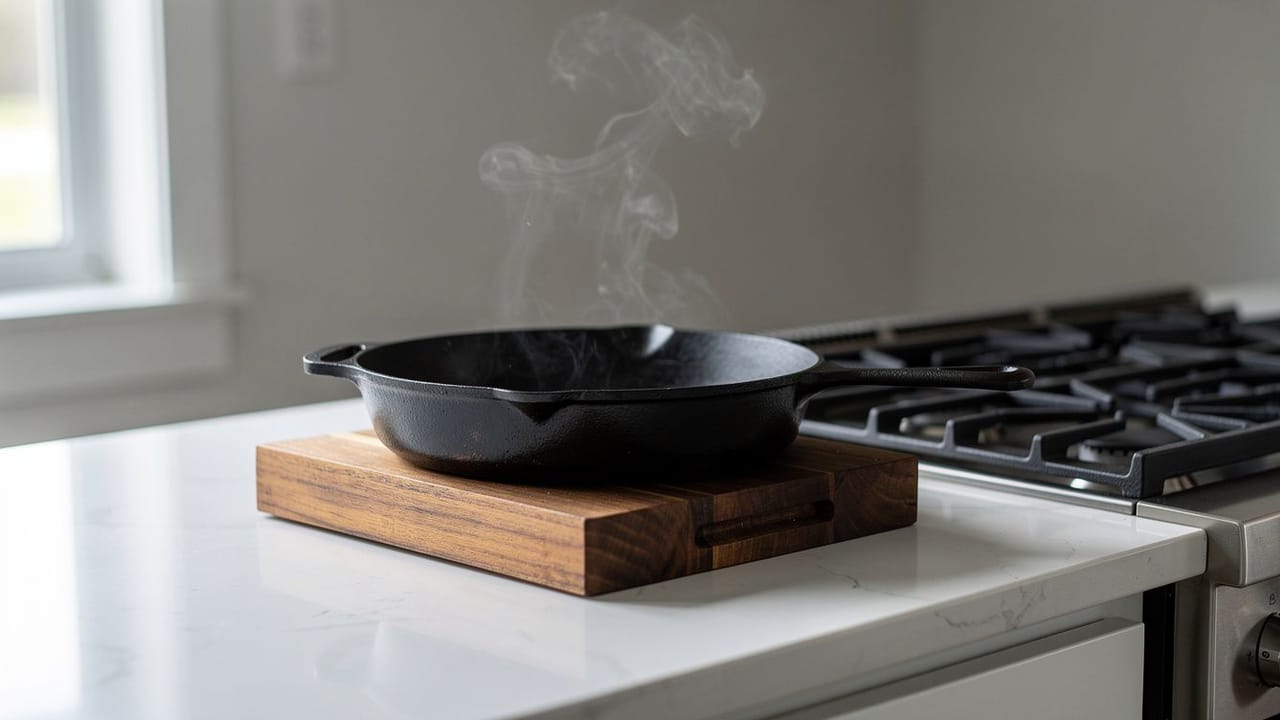
Yes. A quartz countertop is quartz held together with resin, and in MSI’s post on protecting quartz from heat, extended or excessive heat can soften, discolor or scorch that resin. Cambria says the same in its own words: its planning and care page calls the product not heat-proof and says the surface may not withstand the direct transfer of heat from pots and pans.
The color of the slab is not what the answer turns on; the binder is. A white top and a dark one are held together the same way, so the same care applies to both. Heat marks are a different problem from chips and cracks, which are covered in repairing a chipped stone worktop.
What is the heat limit on quartz?
There is no single number, because makers state it differently. MSI’s April 2025 post says quartz surfaces are typically safe up to about 150°F, and puts hot cookware at 300 to 500°F. Cambria gives no temperature at all; it says its product is not heat-proof and leaves it there. Since brands differ, the limit for your countertop is whatever its maker’s care page says, so read that page before you choose a slab.
Temperature is only half of it. MSI describes thermal shock, a sudden and dramatic change in temperature, as stress on the resin that in severe cases can cause hairline cracks. Cambria warns against sudden, rapid temperature change and against direct, sustained heating of the top. So there are two separate risks: a pan straight off a burner, and something that stays hot on one spot for a long time.
Is a trivet really necessary on quartz?
Yes, and under appliances as much as pans. Cambria tells owners to use a closed-weave hot pad or a solid trivet, and names slow cookers, air fryers and heat lamps along with pots and pans. MSI says to use trivets or heat-resistant mats under hot appliances and cookware every time.
The appliances are the ones people forget. A pan comes off the counter in a minute; a slow cooker sits on the same spot all afternoon, which is the direct, sustained heat Cambria warns about. Give every countertop appliance that makes heat a permanent trivet or mat to live on, and keep one beside the cooktop for whatever comes off the burner or out of the oven.
- Pots and pans straight from the cooktop or oven
- Slow cookers and air fryers
- Heat lamps and other appliances that warm the surface beneath them
Cleaners, sealers and the rest of quartz care
Heat is not the only thing the resin minds. Cambria says its quartz is not chemical-proof and tells owners to avoid abrasive cleaners, strong alkaline or acid cleaners and oxidizers, naming bleach and oven cleaners. It also says the surface never needs sealing and advises against applying a sealer, which is a real difference from natural stone; for granite and its relatives, see sealing and maintaining stone.
We template, fabricate and install quartz across Nashville and Middle Tennessee. If you are choosing between slabs and want to know what each maker says about heat before you commit, ask us for an estimate.
Sources
- Cambria, Planning and Care — Not heat-proof; may not withstand direct heat from pots and pans; avoid sudden temperature change and sustained heating; hot pad or trivet under slow cookers, air fryers and heat lamps; avoid abrasive, strong alkaline or acid cleaners and oxidizers such as bleach and oven cleaners; never needs sealing
- MSI Surfaces, Protecting Your Quartz Countertop From Heat (April 12, 2025) — Typically safe to about 150°F; cookware at 300 to 500°F; heat can soften, discolor or scorch the resin; thermal shock and hairline cracks; trivets or mats under hot appliances and cookware
FAQ
Hot Pans on a Quartz Countertop: Where the Limit Is — questions
Can you put a hot pan on a quartz countertop?
Not directly. Cambria says its quartz is not heat-proof and may not withstand the direct transfer of heat from pots and pans, and MSI says extended or excessive heat can soften, discolor or scorch the resin that binds the quartz. Set hot cookware on a solid trivet or a closed-weave hot pad.
How much heat can quartz countertops take?
Makers state it differently. MSI’s care post says quartz is typically safe up to about 150°F, while hot cookware runs 300 to 500°F. Cambria gives no figure and says its product is not heat-proof. Treat your own maker’s care instructions as the limit, and keep pans and hot appliances on a trivet.
How do you protect quartz countertops from heat?
Put a solid trivet or closed-weave hot pad under anything hot, including pans, slow cookers, air fryers and heat lamps, as Cambria advises. Avoid sudden temperature changes and long, direct heating on one spot; MSI says sudden changes stress the resin and in severe cases can cause hairline cracks.
Do quartz countertops need sealing?
Cambria says its quartz never needs sealing and advises against applying sealers, which sets it apart from granite and other natural stone. Quartz brands write their own care instructions, so follow the page from the maker of your countertop, and keep strong, abrasive or oxidizing cleaners off the surface.
Can you use bleach on white quartz countertops?
Cambria tells owners to avoid bleach, oven cleaners and other oxidizers, along with abrasive, strong alkaline or acid cleaners, and says its quartz is not chemical-proof. If a cleaner’s label names bleach or a strong acid or alkali, keep it off the countertop and use what your maker’s care page recommends.
Why does heat leave a mark on white quartz?
Because the mark forms in the resin, not the stone. MSI says extended or excessive heat can soften, discolor or scorch the resin that binds the quartz together. The same is true of any color of quartz. A trivet under hot cookware and appliances keeps that heat off the resin in the first place.